
Plaster Repairs Sunderland

Cracks don’t always mean the whole wall needs replastering. Where the surrounding plaster is sound, localised repairs are often the sensible option — quicker, less disruptive and less expensive than starting again on a wall that’s otherwise fine.

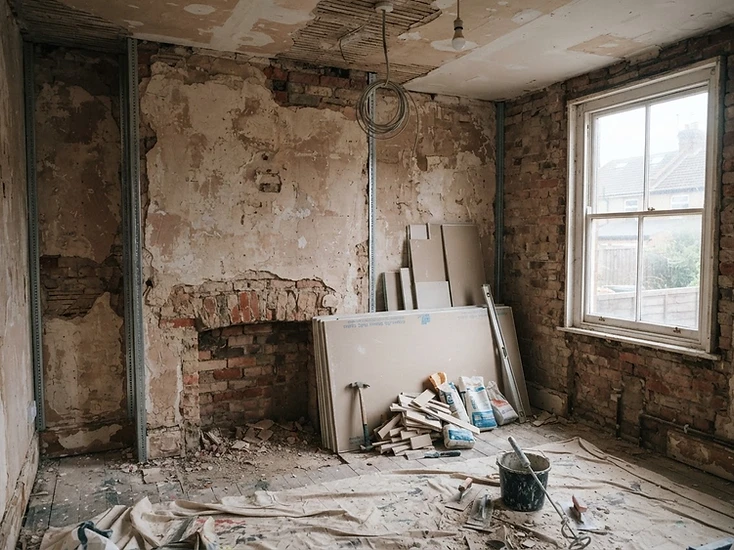
Interior wall stripped back with metal corner beads fitted, ready for repair

Cracks

Fine hairline cracking, settlement cracks and cracks along plasterboard joints are all common and usually repairable. What matters is whether the crack is still moving and why it appeared.

Cracks that keep coming back in exactly the same place, or that are wide, stepped or running diagonally through masonry, are worth having looked at properly rather than filled repeatedly. We won’t diagnose structural movement from a photo.

Holes, loose plaster and damaged sections

Removed fittings, old fixings, knocked corners and blown patches all fall into the same category: cut back to something sound, build up in the right material, and make good so the repair disappears into the wall.

Where a repair sits in the middle of a wall that’s going to be decorated a dark colour, skimming the full wall afterwards sometimes gives a better result than patching alone. We’ll say when that’s worth it.

Making good after electrics and plumbing

Chases from a rewire, socket and switch positions, new radiator pipework, extractor holes and boiler moves all need filling and finishing. This is straightforward work that’s easy to leave looking obvious if it’s rushed.

Best done once first fix is genuinely finished, so nothing gets opened up again afterwards.

Corners and small ceiling areas

Damaged external corners are usually rebuilt with a bead so they hold up next time. Small ceiling repairs — a water-damaged patch under an old leak, a cracked section, a hole from a light fitting — can often be dealt with locally rather than boarding the whole ceiling.

Where water has been involved, it’s worth confirming the leak is fixed and the area has dried before finishing over it.

Questions we get asked

Tell us what you’re looking at

Send a few details and photos if you have them, or ring and talk it through. Either way we’ll help you work out what the wall actually needs.