
Sunderland · Tyne and Wear
Plastering Sunderland
Plastering, skimming and rendering across Sunderland. Tell us what you’re looking at and we’ll help you work out the next step.
Before You Decide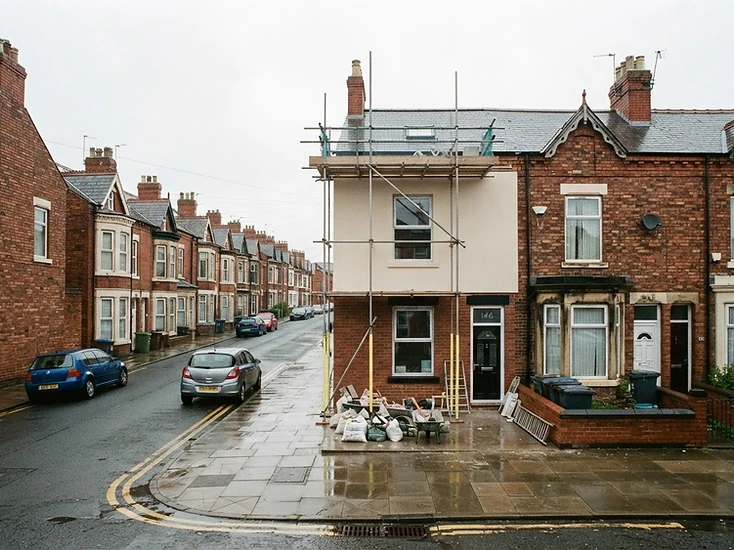
What are you looking at?
Most people arrive knowing what they can see rather than what it’s called. Start with the wall in front of you.
Rough or uneven walls
Walls that are tired, patched or ready for a smoother finish.
Plastering & SkimmingCracked or damaged plaster
Loose areas, cracks, holes, chasing or sections that need making good.
Plaster RepairsCracked or tired exterior render
Localised damage, hollow areas, cracking or weathered external finishes.
Render RepairsChanging the outside of the house
Full rendering, coloured finishes, silicone systems and K Rend options.
House RenderingInside or outside?
Two sides of the same trade, with fairly different decisions behind each one.

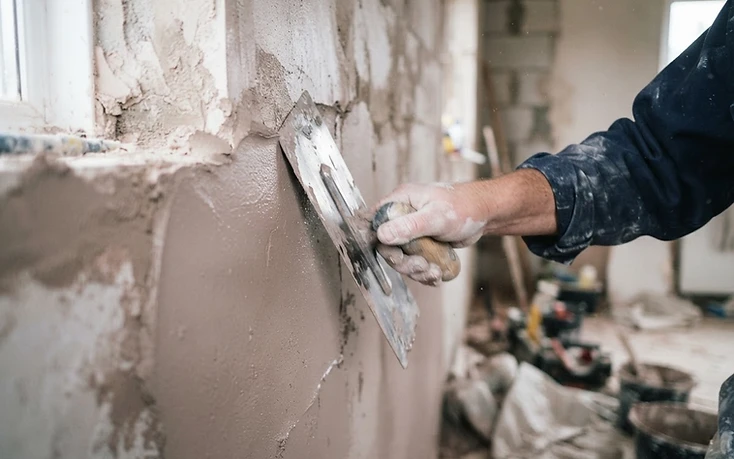
I need plastering
- Wall plastering and skimming
- Ceilings, cracked or damaged
- Loose or blown internal plaster
- Patching and making good
- Larger renovation and refurbishment work

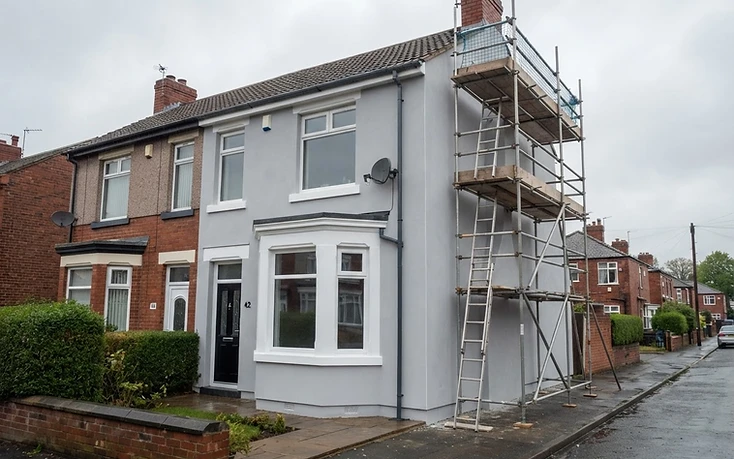
I need rendering
- House rendering and full elevations
- Render repairs and hollow areas
- K Rend and silicone render systems
- Coloured exterior finishes
- Assessing existing render or pebble dash
Inside
Plastering services in Sunderland
Walls, ceilings, repairs and full rooms — from a single patch to a whole property refurbishment.
Plastering
Walls, rooms and renovation work, including plasterboard and bare masonry backgrounds.
Skimming
A smooth finishing coat where the existing surface is sound enough to take it.
Plaster repairs
Cracks, holes, loose sections, chasing and making good after other trades.
Ceilings
Cracked ceilings, damaged plasterboard, textured finishes and localised repairs.
Most internal jobs come down to one question: is the background sound enough to skim, or does it need taking back? We’d rather answer that honestly than quote for the cheapest option and hope.
Can it be skimmed, or does it need taking back further?
This is the question behind most plastering quotes. Not every wall can simply be skimmed — what matters is the condition of what’s already there. Tapping a wall, looking at how it’s been patched before and checking how firmly the old plaster is holding usually tells us more than a photo of the paintwork.
Skimming
A finishing layer over a background that’s sound enough to take it. The result is a smooth, flat surface ready for decorating once it’s dried out.
Works where the existing plaster is firm, reasonably flat and well bonded to the wall behind it.
Replastering
More extensive work where the existing surface or the plaster underneath isn’t suitable for a simple skim, so it comes back further before building up again.
Considered where old plaster is hollow, crumbling, heavily patched or too uneven to correct in a thin coat.
Repairs
Localised work — cracks, holes, damaged sections, chases after electrical or plumbing work, broken corners and small ceiling areas.
Sensible where the rest of the wall is sound and only part of it needs attention.
Not sure which one you’re looking at? That’s fine — read skimming in Sunderland or plaster repairs and we can confirm on site.
Outside
Rendering services in Sunderland
Exterior rendering, repairs and coloured finishes for houses across Wearside.
Rendering
The full picture: systems, condition, preparation and what changes the cost.
House rendering
Complete exterior projects, one elevation or the whole property.
K Rend
What the brand actually is, and where its systems tend to suit.
Silicone rendering
Modern coloured finishes with good water repellency where correctly specified.
Render repairs
Cracking, hollow areas, damaged corners and failed sections.
Pebble dash & roughcast
Repair, replace or modernise older textured exteriors.
Rendering starts with the wall you’ve already got
Not with a product name. Here’s where most Sunderland exterior enquiries actually begin.
The render is cracked
Fine cracking and structural cracking are not the same thing. The cause and the condition of the surrounding render matter before choosing between a repair and a larger replacement.
Render repairsIt sounds hollow when tapped
Areas that have separated from the background are often called blown render. They usually need assessing rather than simply coating over, because a new finish can only hold to what’s underneath it.
What blown render meansIt’s old pebble dash
Whether roughcast can be over-rendered or needs removing depends on how sound it is and on the system being proposed. There’s no universal answer to this one.
Pebble dash & roughcastI want a modern coloured finish
Silicone render, K Rend and monocouche all give a coloured through-finish. They behave slightly differently and suit different backgrounds and budgets.
House renderingThe exterior walls feel cold
External wall insulation may be relevant, but it’s a building-system decision rather than a finish — thickness, detailing around windows, roofline and ventilation all change. It isn’t the same as re-rendering.
Talk it throughThere are signs of damp inside
Rendering can form part of improving an external wall, but if there are signs of damp or persistent moisture it’s better to understand where that moisture is coming from before simply covering the surface.
Before You Decide
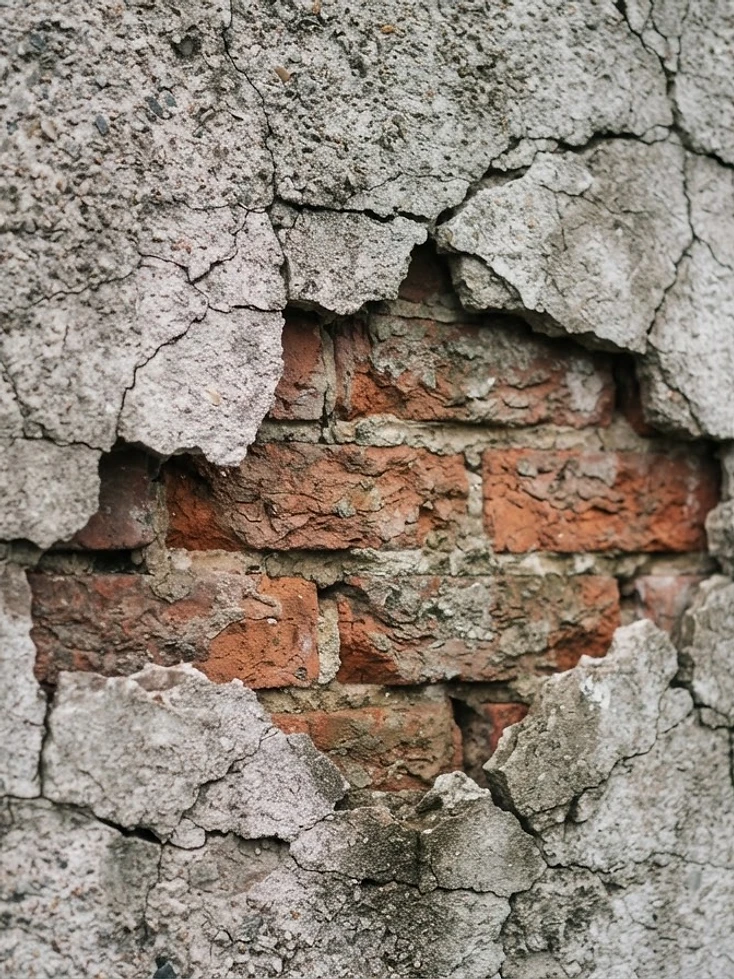


Plastering Sunderland homes — old and new
Sunderland has a real mix of housing — from traditional Sunderland cottages and Victorian and Edwardian terraces to post-war semis and newer estates. What sits underneath the finish can vary just as much. Older plaster, modern plasterboard, painted render, pebble dash and repaired surfaces can all call for different preparation.
An older terrace around Ashbrooke can present very different backgrounds from a later semi elsewhere in the city. It’s the reason we’d rather look at the wall than quote off a room size alone.
Wearside has always been a place built around making and building — from the River Wear and the shipyards to the homes that grew around them. That’s the standard we work to: things that stay put.
Older and conservation-area properties
If you’re changing the exterior appearance of an older property, particularly in one of Sunderland’s conservation areas around places such as Ashbrooke or Roker, it can be worth checking any local restrictions before settling on a finish. Original brickwork isn’t automatically something that ought to be rendered, and we’ll say so if we think it’s better left as it is.

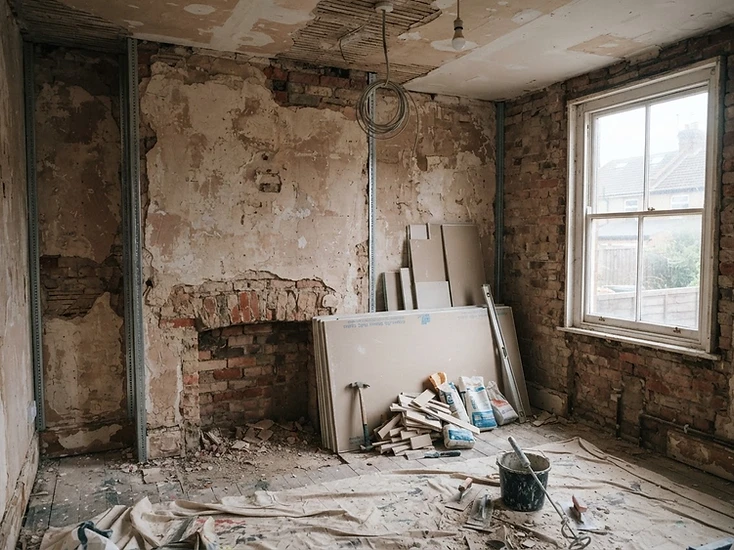
The finish is the part you see.
The preparation underneath is the part that helps it stay there.
Methods vary between properties and systems, so nothing here is a universal recipe. But the principle doesn’t change: sort out what’s behind the finish first.
Inside
- Removing loose or unsound material
- Preparing the background so the coat has something to hold to
- Repairing damage before the finish goes on
- Bonding or priming where appropriate
- Reinforcing joints, fitting beads and corner details
- Getting plasterboard flat and fixed properly first
Outside
- Checking the condition of the existing background
- Removing unsound render where needed
- Repair work before any new coats
- Beads, stop ends and edge details around openings
- Appropriate base coats for the system
- Reinforcement where the system specifies it
Before You Decide
You don’t need to book anything yet. Sixteen straight answers on skimming, cracks, blown render, pebble dash, coloured finishes, scaffolding and weather — save the ones that apply to your house and come back to them later.
Read Before You DecideHow it usually goes
No methodology, no branded process. Some jobs can be priced from a good set of photos; others genuinely need looking at first, and we’ll say which yours is.
- 1
Tell us what you’re looking at
Call, send the form or include a few photos. Cracks, damaged render and exterior work are much easier to judge with pictures.
- 2
Work out what the surface needs
The right approach depends on the existing plaster, render and background — not on what’s quickest to quote.
- 3
Talk through the options
Repair, skim, replaster or render, and what each one realistically involves for your house.
- 4
Arrange the work
Once scope, access and timing are clear. Exterior work is also booked with the weather in mind.
Around Sunderland
Working across Sunderland and surrounding areas. If you’re just outside the list, ask — it usually comes down to access and the size of the job.
Wider coverage around Houghton-le-Spring and Washington depending on the work involved.
- Roker
- Seaburn
- Fulwell
- Monkwearmouth
- Southwick
- Pallion
- Hendon
- Grangetown
- Ryhope
- Silksworth
- Ashbrooke
- Herrington
Tell us what you’re looking at
Send a few details and photos if you have them, or ring and talk it through. Either way we’ll help you work out what the wall actually needs.